Table Of Content
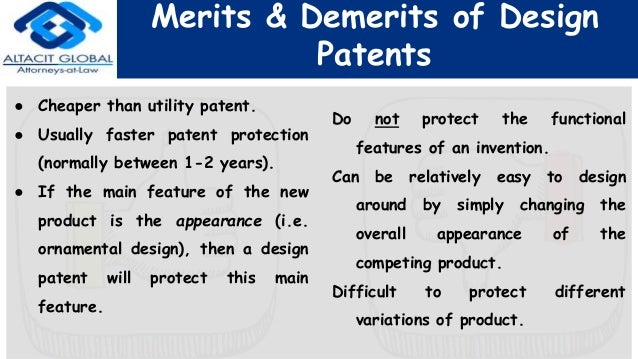
Learn the difference between utility and design patents, and how each might apply to your invention. While they protect the basic functional aspects of the invention, they also provide broader protection for the patent. This makes it harder for a competing product to get away with patent infringement. A utility patent can also protect a variety of versions of the product with just one patent.
Patent Applications
For inventions involving computer programming, computer program listings may be submitted as part of the specification as set forth in 37 CFR § 1.96(b) and (c). The lines of the specification must be 1.5 or double spaced (lines of text not comprising the specification need not be 1.5 or double spaced). It is desirable to include an indentation at the beginning of each new paragraph and for paragraphs to be numbered (e.g., [0001], [0002], [0003], etc.).
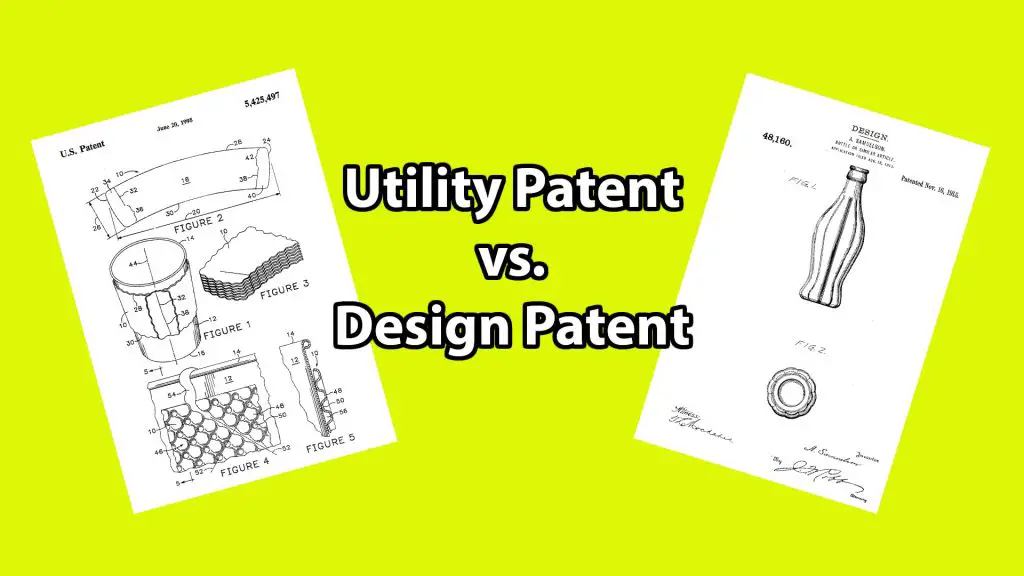
Drawings
When factoring in the additional time taken by RCEs, the total average pendency for all utility patents jumps up to 28.1 months. The drawing must contain as many views as necessary to show the invention. Detailed views of portions of elements, on a larger scale if necessary, may also be used. Views must not be connected by projection lines and must not contain center lines. Waveforms of electrical signals may be connected by dashed lines to show the relative timing of the waveforms.
year Duration for Design Patents
The postcard should contain a detailed list that identifies each type of document and the number of pages of each document. Upon receipt at the USPTO, the detailed list on the postcard will be compared to the actual contents of the delivery. Any discrepancies between the detailed list and the actual contents will be noted on the postcard. The postcard will be initialed and date stamped by the person who reviewed the application in the Office of Patent Application Processing. The postcard will be returned by mail to the addressee whose name appears on the postcard.
The Federal Circuit Considers: What Makes a Design Patent Obvious? - Hunton Andrews Kurth LLP
The Federal Circuit Considers: What Makes a Design Patent Obvious?.
Posted: Mon, 12 Feb 2024 08:00:00 GMT [source]
Functional Protection With Utility Patents
Venturing into the world of patents without guidance can be a daunting endeavor. Engaging with a patent attorney or law firm specializing in patent law can offer invaluable insights, helping you determine the most fitting protection for your invention. Now, before we dive into these patents and the potential uses for each of them, know that your best bet is talking to a patent attorney. This article cannot replace their expertise and should not be taken to constitute any sort of legal advice. It is important to note that a provisional patent application will not mature into an issued patent unless properly converted into a non-provisional patent application within the 12-month statutory term.
Design Patents vs. Utility Patents
During the 1990s, the government awarded more than 70 percent of applicants with utility patents. Design patents might cost as much as 90 percent less than utility patents. For this reason, you should have a patent attorney research existing patents. If someone already owns the utility patent you want, you'll have to get his or her approval before selling your product.
Part of why the case lasted so long — the massive legal budgets of both parties notwithstanding — was that both design and utility patents came under scrutiny. The two tech giants battled for seven years across multiple jurisdictions, suits and countersuits before finally settling in 2018, with a final award of $539 million to Apple. Interestingly, the same product can be covered by both utility and design patents if it meets the criteria for which patent covers both functional and ornamental features.
Federal Circuit Should Spurn Appeal to Scrap Design Patent Test - Bloomberg Law
Federal Circuit Should Spurn Appeal to Scrap Design Patent Test.
Posted: Thu, 01 Feb 2024 08:00:00 GMT [source]
Sometimes an invention can get protection from both a design patent and a utility patent. If the invention has a function or structure that's unique, along with an ornamental design that's unique, you should think about filing both a design patent application and a utility patent application. It can be hard to file both, and you should speak with an attorney first to make sure you follow all the rules and procedures correctly. Both applications will give you a status of patent pending while they're being processed at the Patent Office. The intricacies of patents can be challenging, yet they play a crucial role in safeguarding our intellectual property.
Design Patents vs. Utility Patents: What You Need to Know About Differences
As mentioned, design patents protect the appearance of something, not the function. A granted utility patent provides protection for the inventor or owner of the patent rights for 20 years from the date the application is filed. For a design patent, the period during which an application must be filed after any public disclosure is six months, a notably shorter window than the 12-month grace period provided for utility patents.
They're different and easier to get than utility patents because they don't (and can't) have a function. Not only is it more expensive, but it also takes a while to get patent protection, to the tune of two to three years. A patent’s claim scope defines what part of an invention the patent covers. Clearly defining specific useful aspects or identifying ornamental features is critical for each application. Once the patent offices issues or grants your patent, you can enforce your rights under the patent by hiring an attorney to sue any party that infringes upon your patent.
On average, roughly 7 out of 8 design patent applications will be allowed. Since utility patents claim the function or structure of an invention, the outer appearance of a product is less relevant to the issue of infringement. A competitor may introduce a product with a very different appearance from that of a patented product and still infringe a utility patent.
However, the ornamental features need not include the entire device, but only a small portion of it. Thus, the shape of an opening in a box may be protected by itself regardless of the shape of the box it is positioned in. Furthermore, as your patent application is examined by the USPTO, you will likely need to make some amendments to the claims and present legal arguments in response to office actions issued by the assigned USPTO patent examiner.
For more detailed information on utility patents, read Red Point’s Ultimate Guide to American Utility Patents. While utility patents safeguard the practical components of an invention, such as how it works or its method for achieving specific results, design patents protect only its ornamental appearance. Understanding these distinctions can help inventors determine which type of protection best suits their needs and ensure they file appropriate patent applications with national patent offices. Design patents are often easier to obtain than utility patents, although the application process is still detailed and sometimes just as lengthy. There is no standardized form for a design patent application, although applicants are required to submit clear and detailed drawings to the USPTO, often showing the invention from all or multiple angles.
They were debating whether the Samsung phone looked similar to the iPhone, not about the graphics interface that allowed remote communication. Getting licensing deals for inventions is more complex with a design patent compared to a utility patent. This is why it's smart to have a patent attorney review and research patents that are similar before you spent money on developing a new product.
Also, its reproductive process must be the same each time, leading to the same plant output. An example of a popular design patent is the design of the iPhone, which Apple made to stand out as their own through a phone with rounded corners and a rectangular screen surrounded with a bezel. The key to the overall appearance is the device's proportions and shape. We find this to be a very critical first step that most patent attorneys overlook. We begin with this signature step so we don’t waste your valuable time and resources on a patent you may not need. Remember, securing your inventive/creative works is not just about protecting your intellectual property; it’s about realizing the potential of your innovation and bringing it to the world.
Some products or inventions can qualify for both a utility patent and a design patent. So, if you want to protect your product, consider whether it qualifies for both a utility and design patent. Of course, the design patent will protect the appearance of your product and the utility patent will protect the functional features of your product. As you can tell by the amount of detail that is required to get a utility patent vs getting a design patent, design patents are much easier to get. The design patent application requires considerably less detail than utility patent application. Provisional patent applications give inventors a priority date while allowing them to continue working on their invention and looking for investors to invest in their invention.



No comments:
Post a Comment